Artist to Artist: Blevins
When it comes to making music together, the band Blevins share more than just a creative bond…their connection as brothers allows for a constant and immersive creative process. Formed by Brandon, Kevynn, and Dillon Blevins, the group is currently based in Texas. From the very start of my conversation with them, it was clear that they all have a strong connection to each other. Ever since Dillon was in 5th grade, Kevynn in 6th, and Brandon 7th, making music together has been a mainstay in their lives. Their interest in music was also spurred on by their Mother’s side of the family, many of whom play Texan-Mexican music in Tejano bands. Their Mother, in fact, is no stranger to the world of music…she has the credential of having been a back up dancer for the acclaimed “queen of Tejano music”, Selena.
Ever since their early beginnings as a band, the three have continued to make music the central core of their lives while building an impressive track record of writing, producing, and booking shows all on their own. As Brandon recounted when talking about their first gig, “… from there on, we just did it forever. We've really not done anything else since.” Brandon is the oldest of the three and the main vocalist as well as lead guitarist, while also taking charge in the studio when it comes to production and sound engineering. Kevynn, the second oldest, plays the bass, and also does the band’s visual artwork for everything from the band’s website to album cover art. Dillon, the youngest, mainly plays drums in the group but also sings harmonies with the other two. All of them write songs for the group and have learned to be versatile in playing multiple instruments as well.
During my conversation with them, we talked about their creative process, the making of their upcoming debut album, and their journey as a completely DIY band.
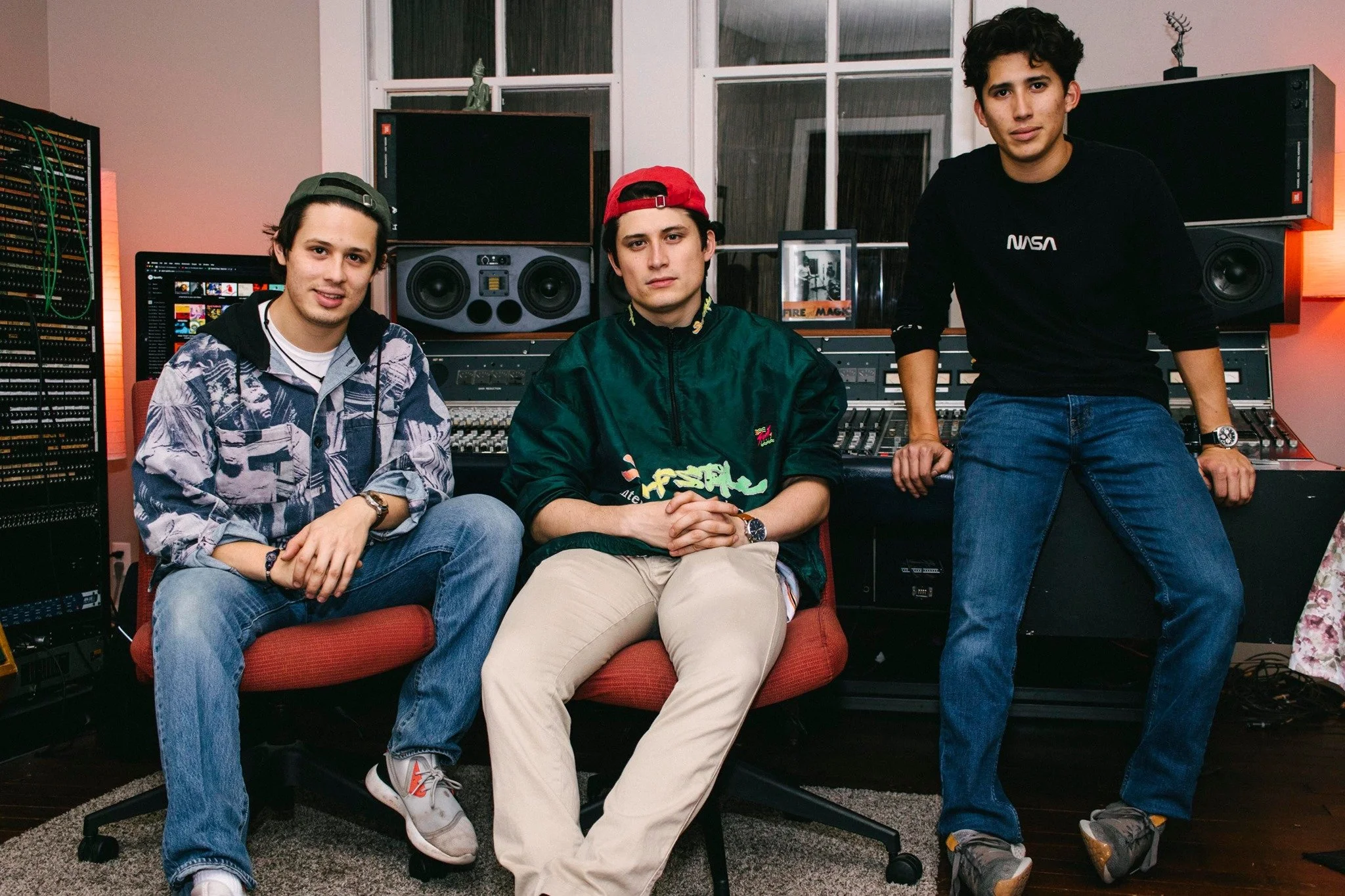
Left To Right: Kevynn, Brandon, and Dillon Blevins
Q: That's awesome that you guys are doing this together. I think it's a special thing to have that family bond, but then to also have another bond through all the music stuff. Do you write together as well?
Brandon: When it comes to really collaborating, the idea either comes when we're all together or when we're alone. And then we kind of collaborate and I do most of the engineering and workload of the production in terms of putting it in the computer or whatever. But we all have the overall vision and it literally can happen in so many different ways.
Q: I bet that can get a little exhausting if you try to keep running through it all together 24/7.
Brandon: Yes. And as brothers, we're aware of that dynamic to where we give each other a good space creatively. I'm grateful for how much trust they put in me and I hope that I reciprocate that trust back.
Kevynn: There definitely has to be a lot of selflessness when it comes to all of this, you know, working together as brothers, doing business together and the creative process like Brandon talked about…it fluctuates a lot with how songs come about or how different pieces of art come out, but yeah, definitely selflessness is a necessity in this course, this path, you know?
As far as musical influences go, their list has a wide and eclectic range of everything from Pink Floyd, to John Mayer, to SZA…even including composers such as John Williams and Howard Shore. As a band, they have been open to a diverse variety which continues to shape and influence their own unique sound, which is a big factor in the music that they’ve been working on.
Q: I think what contributes to an artist or band’s sound is when you're willing to have that variety and you're not sticking to one sort of genre.
Brandon: Yeah. I would say we're not exactly at the end of our album process. We're definitely in the latter half and what you just said right there, kind of not limiting ourselves. Sometimes we have found that the negative space though is really important, especially with the finishing of it. There's definitely a point where cohesion is a factor in the decision making process of the aesthetic core of the album.
Q: That's exciting though with a new album. Do you feel like it's kind of switching up your sound a little bit or are you kind of just sticking to the same track?
Brandon: It's a very wide spectrum album. It does include, I would say, more of “Fading Into You” as opposed to our first two singles that were more instrumental rock based. I guess this album of ours has three core genre centers. All the way to the left or whatever is the indie music and then in the middle it's electronically infused instrumental music. And then there's just kind of more electronic music. So that umbrella is going to be the album.
Q: I like that. There's a thought process behind the order and the way that the album flows. It's just such an important part of telling a story and expressing yourself. So I think that's awesome that you guys are putting intentionality behind it.
Brandon: We definitely embarked with intentionality, but so much of what we've created so far has really come out of the art itself. You know, like it's led us as much as we're trying to write it. For example, Dillon wrote a song called “Be Seeing You”; a very deep heartfelt song, personal song.
And sometimes you just hear something and you gotta adapt to it.
It's so good that you gotta try to include that with everything, but in doing so you have to make the bridges connect. It can't just be all random, you know? You have to connect those dots.
So we've gone through different iterations of this album for sure. It’s new when we release it to anyone who hasn't heard it, but this album has been in the works for years now.
Q: Were there any roadblocks while you were trying to make the album where you felt like it wasn't going to happen?
Brandon: Dude. Yeah, there's a big part. Okay, Dillon…
Dillon: One of them was in the early stages of “this is the album. This is kind of like the shape of it, these are the songs”. We were still working on it and some dude broke in through our window, stole our laptop and wiped the computer. So we didn't have a backup to start from.
Brandon: We found it in our neighbor's yard, wiped.
Dillon: We chased him down and the computer just had nothing on it. And it was our fault for not having a backup.
Brandon: That happened like four years ago?
Kevynn: Or five years ago or something.
Brandon: And then we had to rewrite the songs…it was a blessing in disguise. At that point in time, I'd say that we were thinking that the album was like 70% done, 65% done.
Kevynn: It is a very different sounding album now…what it's evolved into.
Brandon: Another one is just being a musician. In 2025, that's what we do. We don't clock in at nine to five or nothing. We are entrepreneurs, independent artists, musicians, and dealing with people not respecting the value that you bring, all that stuff. Adapting to COVID was a huge thing. We had canceled a bunch of stuff. Yeah, life, gains, losses, deaths, births, all of it, dude. The album has spanned that much time. That's not like one year…half a decade, maybe.
Q: That probably makes it that much more rewarding though, to have it almost finished and almost ready to put out.
Dillon: It's rewarding and also it's that much more real because the life that we've been living is going directly into the project, into the album. So the whole narrative, the story, is life. It's based off of the losses and the gains. So there's beauty in it.
Q: Yeah, When you're writing in an authentic way, I think all of that just naturally pours into what you're creating and what you're writing, even instrumentally, I think.
Brandon: So we do it all in house…Like, my room is like half my room, half studio. This is the studio. And when you said about pouring the emotions instrumentally…I will go to such extreme lengths to capture the organic capture of a take, like drums or whatever, because you're absolutely right. You can put subconscious information in the instruments. If you're tuned in and everything's recording, yeah, definitely.
Q: Being in that space where it all happens, were there ever times when you just woke up in the middle of the night with an idea thinking, “I have to get this down”?
Brandon: We should all answer that… ‘cause all of us have different methods of capturing that. For me, I'm going to stay up later. If it's in the middle of the night, I get my phone and I do a little voice memo. I’m like, ‘I need to put these vocals down, but everybody's sleeping.’ And I go out to my garage and I'm like, ‘finally some peace and quiet.’
Kevynn, what's your method of capturing ideas?
Kevynn: Voice memos are huge. Also, just sometimes in the middle of the night. And then what my role is in this band and stuff…I'm in the visual department. So I kind of create the visuals and the narratives between the songs that are all kind of connected and intertwined…posters and stuff. So I'm just really trying to find a way to integrate visuals and how we release music and building that bridge, especially when we start performing it live. Ideas come in the shower or when I'm driving and stuff, and I pull over just to write it down, because my storage is full right now on my phone.
So just things like that… I carry a little notebook on me or have my notes on my phone. And yeah, it's just it's crazy how different it is for everybody. But I've fallen in love with the way that we all kind of go into our own, you know, modes, creative modes, and just come together and how things blossom from there. I think it's pretty cool.
How about you Dillon?
Dillon: Well, being a musician is cool, because you're also in tune with your body.
You have to listen to whenever an idea comes…if you don't capture it, it may leave. We're antennas… you’ve got to stay open, and whenever it comes, be ready to capture it. Because it is random whenever the good idea comes. If you miss out, you could miss out on a good song or a good piece of a song. One of our songs “As I'm Fading Into You” came from a different song, and just playing the same synth part and playing different instrumentation on top of it, just like in the moment. It came from just following a random feeling or vibe and playing instruments to a different song. Gotta be ready to capture.
Q: Yeah, I think being open to everything is a very important part. It sounds like all of you are very in tune with how you each create.
Brandon: Well, thankfully, we're not too different in terms of a breaking point, because a point of contention for collaboration is just having different bases where they're coming from. But in a certain way, we have the same subconscious inspirations from the games we played growing up or the movies we saw growing up or the stories our dad told or experiences we've had in our own lives.
So thankfully, we're not too different. But thankfully, we're also, you know, different people.
Q: Have you guys tried to collaborate with other artists?
Brandon: It's not that we're not collaborator friendly. It's just that we're so DIY. First off, we're working on our first album. So we're kind of trying to get ourselves established before we just, you know, meander. But it is cool, talking, meeting with other people.
Q: As far as the future, do you have at least some general goals or general directions that you see yourselves going?
Brandon: Definitely
Kevynn: One thing for sure is that we're planning on making a big move to New York. And yeah, that's, that's probably my personal biggest one. I'm sure my brothers agree.
Brandon: We love New York, very inspired by the city. Have a friend there who is gracious enough to let us stay on his couch pretty often. So you take that opportunity a lot.
More than anything, for me, I would say, is having our album done, where we can say we wrote, mixed, mastered, produced, composed, performed, and recorded the entire thing independently. And then, you know, have also some help distribution wise or whatever, on the way out. But just having that sense of accomplishment internally, and just being like, okay, I can listen to an album of mine that is fully front to back, that I can lay my legacy on. Not only this album, but art in general. I think that's what is exciting to all three of us about artists…the legacy, in terms of just contributing to something that will go beyond our lifetime.
Q: Yeah, I think that in itself is a super powerful thing. And if you really think about it, you're creating something that's completely unique. And that's never been put out or created before.
Brandon: Yes, because it's so internal and DIY, you know, that's what I'm excited about. And we'll be very proud of knowing as well what we've been through all throughout these years, and some in different ways, just like the resilience of that. That's, for me, the North Star at the moment.
And then once we get that one, we'll look forward to the next North Star and the process of striving and, you know, longing for change and getting it and the whole thing.
Q: Did you find yourself creating any songs that you feel belong on another project? Like you created something that you're like, “okay, I don't think this is quite for this one. But I think this could be down the road.”
Dillon: It's been like a discussion all the time with the brothers. It's like, okay, there's this new jam. That's super cool. It could be something but what do we want to do? It's always hard to decide because, you know, if it's new, it's obviously up to date with where we're at in life and like our production skills. But it's a hard one to just close up this album and save some and finish this one.
Brandon: That's something that we resonate with so hard at times with those ideas that you asked about. Sometimes we adapt the entirety of what we're doing to that. And that's been the challenge going forward is, you know, the balance of novelty in something and the creative process, but also going back and fleshing it out and not being closed to new ideas in the process.
Because in my experience, if I just only focus on one thing all the time, I'm destined to create something new just to inspire me. So it's just having that balance of being like, I can make something new. That doesn't necessarily mean it has to go on the record.
But because we're aware enough, when we do hear something that is undeniable, we're like, yeah, that's like, that has to be something. So I feel like we have a good grasp of quality control. And we're just learning what to do with what we have and how to put it together.
Q: I think it's really cool that you guys are doing it all DIY. I think that's something that not a ton of people can easily say, especially with this world of writing with a ton of other people and, and using more of the easier means to an end. So I'm sure that feels very rewarding despite all the challenges.
Brandon: That's what's kept us going…that exact thing you said right there. Just be able to just hang your hat on it, just to have it, to look at it on Spotify and be like, dude, we not only did that, but for it to also be good. Because it doesn't matter if you make it all yourself and it sucks.
Q: You have to have pride in it. And yeah, I think that's a tough lesson that I had to learn…you can't just put stuff out just to put things out. You need to be able to feel proud when you see it and listen to it. I think it's important that you're able to listen to it and not cringe. That’s a low bar. But I think there's too many people out there that are just like, ‘I just need to put as much stuff out as possible’.
Dillon: No, that's not what art is.
Q: Yeah, exactly. It's not about saturating the market. It's about creating something that you feel like expresses who you are and that other people can relate to.
Brandon: But if we can saturate the market with the best songs possible…one hundred percent.
Q: I'm very excited just hearing you guys talk about the album.
I'm very excited to hear it. Kevynn, I know you said you do a lot of the visual stuff.
Do you have a vision for how the album is gonna look and what the visuals are?
Kevynn: A lot of it is just like we were talking about, how ideas and brainstorming come in from nowhere, you know. And it's kind of hard to jot down visual ideas because with audio and songs, you can do lyrics or do a voice melody or something, but visuals, it's kind of hard because it's an image, and it's kind of hard to jot it down real quick.
But, yeah, a lot of it is inspired by the music…the music is the core of where the visuals are coming from. Sometimes it starts with music, or sometimes it starts with a visual that kind of creates a song… it’s kind of weird how it goes hand in hand together. A lot of the album is going to be very liminal. It just has a lot of crazy different aesthetics that are built into it, and shapes, symmetry…it's kind of hard to describe it, but it's definitely psychedelic.
Brandon: Tame Impala's visual style is very inspiring. And we like playing video games at times and old video game type energy. We played Nintendo 64 growing up, it was huge for us.

Album Artwork by Kevynn Blevins
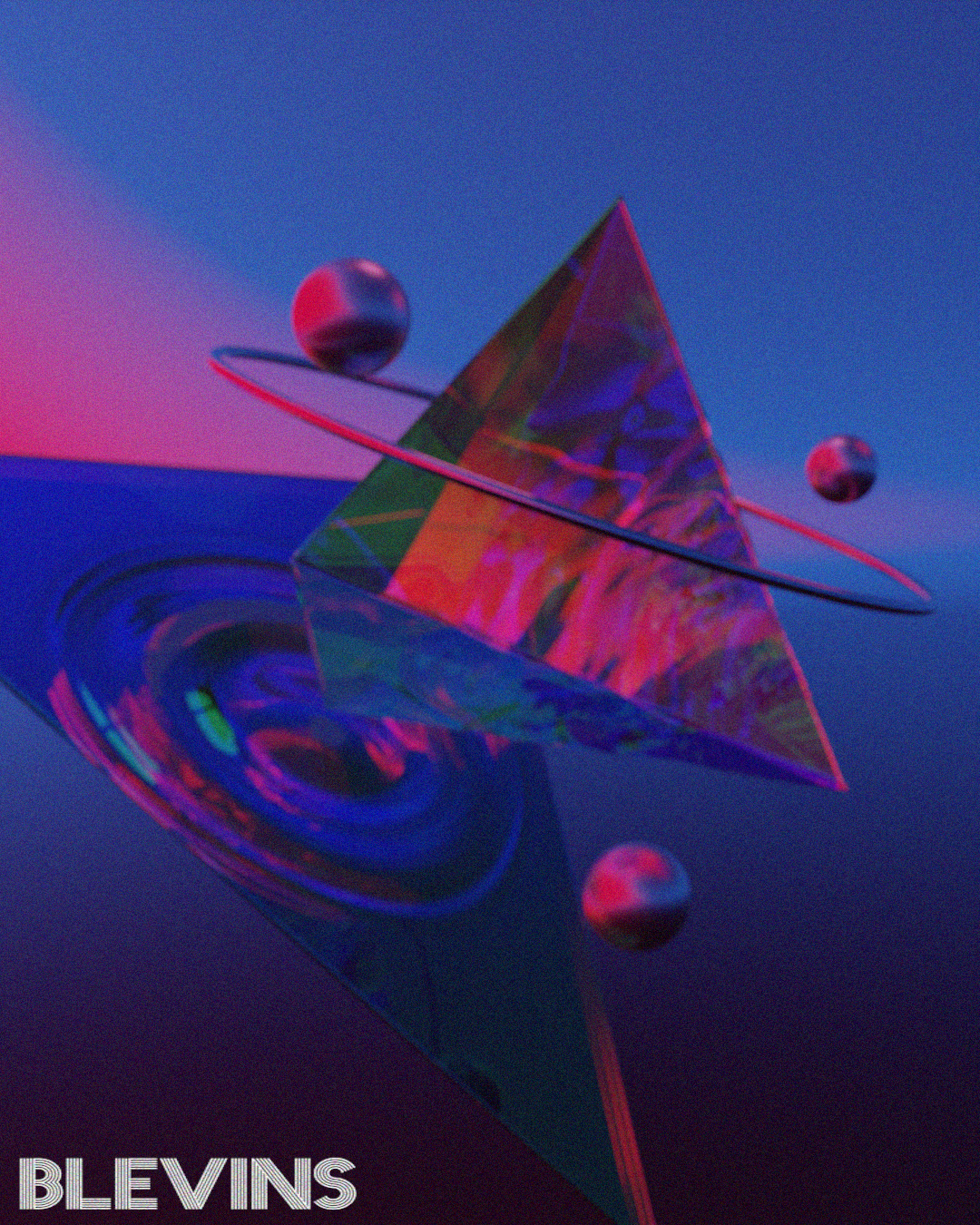
Album Artwork by Kevynn Blevins
Blevins is very much DIY in every sense of the word. Not only is music their only source of income…they also produce everything themselves, book their own shows, and everything in between. All of this in itself is no small feat, especially in today’s world where artists have to wear so many hats just to build a following. Towards the later half of the conversation, we talked about what it takes to go down the DIY path as a band.
Q: When you do gigs, is it a lot of cover songs still, or mostly original stuff?
Kevynn: Currently, we do some covers. We're starting to do gigs with half a set of just original music. And that's really exciting.
Brandon: It's also based off of the gig requirements. There's a difference between a gig and then a show. So we recently did a show at this place called Green Hall. It's kind of a country venue, well-known in the area. And that one, we kind of put together, like, our set more. And the one in New York we're going to play… those are shows. And then gigs are like someone's paying you a couple thousand or whatever. And you go and just jam out and just, you know, make some money.
But also, at the same time, to get your chops up and whatever. So that's a big part of the aspirations of the music is to completely turn it around and just do shows, you know? Shows with our own music. I'm looking forward to that.
Q: Yeah. I think it's kind of like your rite of passage to have to kind of go through those cover gigs because it's very much like that up here as well, where there are a lot of places that they just expect you to play covers. And that's kind of what people are expecting and what people want. And then, like you were saying, there are the shows that you can take complete creative control of. But like you said, you're just polishing up your skills. You're just getting better by playing more.
Brandon: Exactly how we see it, too.
Q: Right. Everything counts.
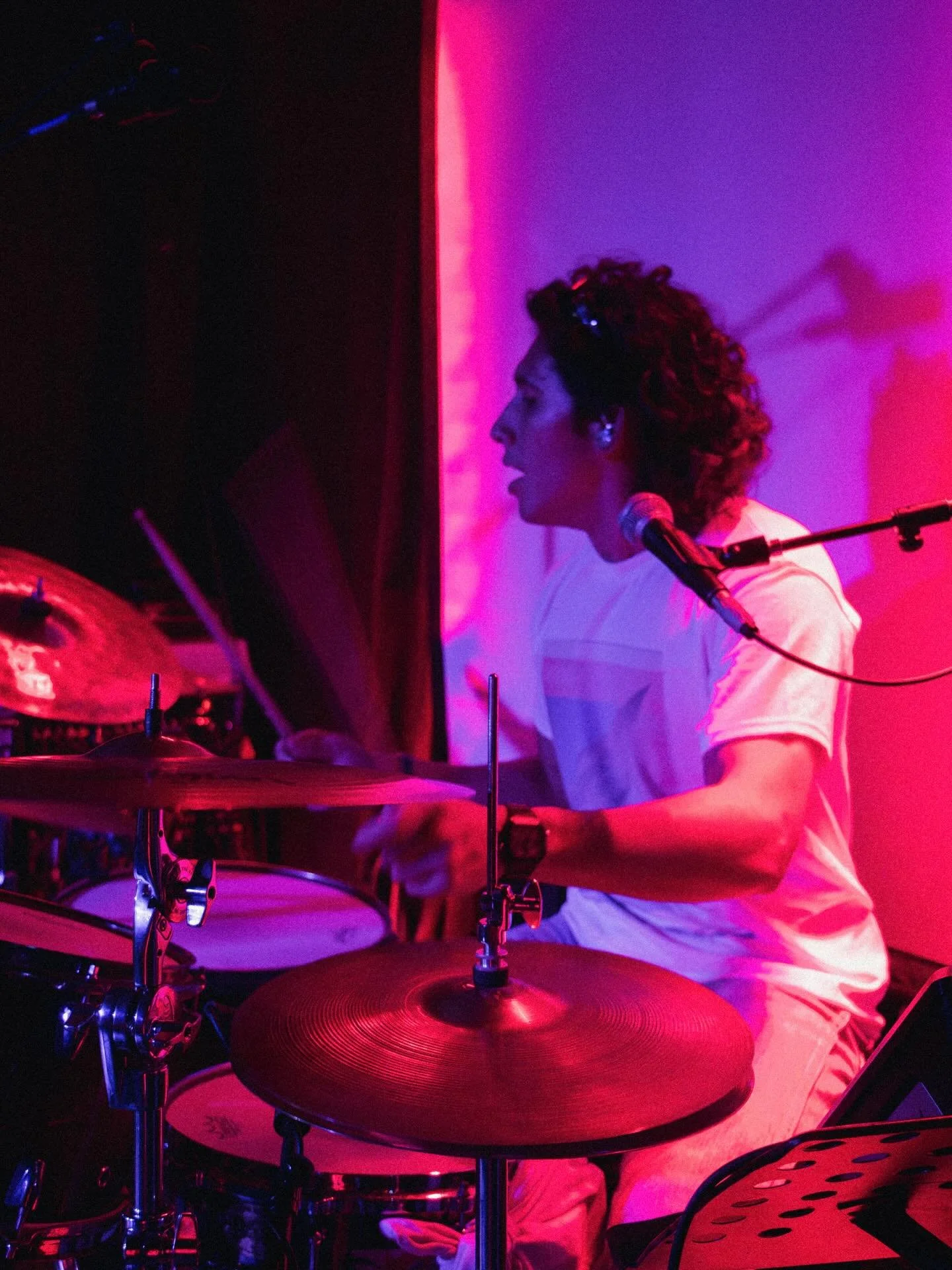
Recent Blevins Performance in Manhattan, New York
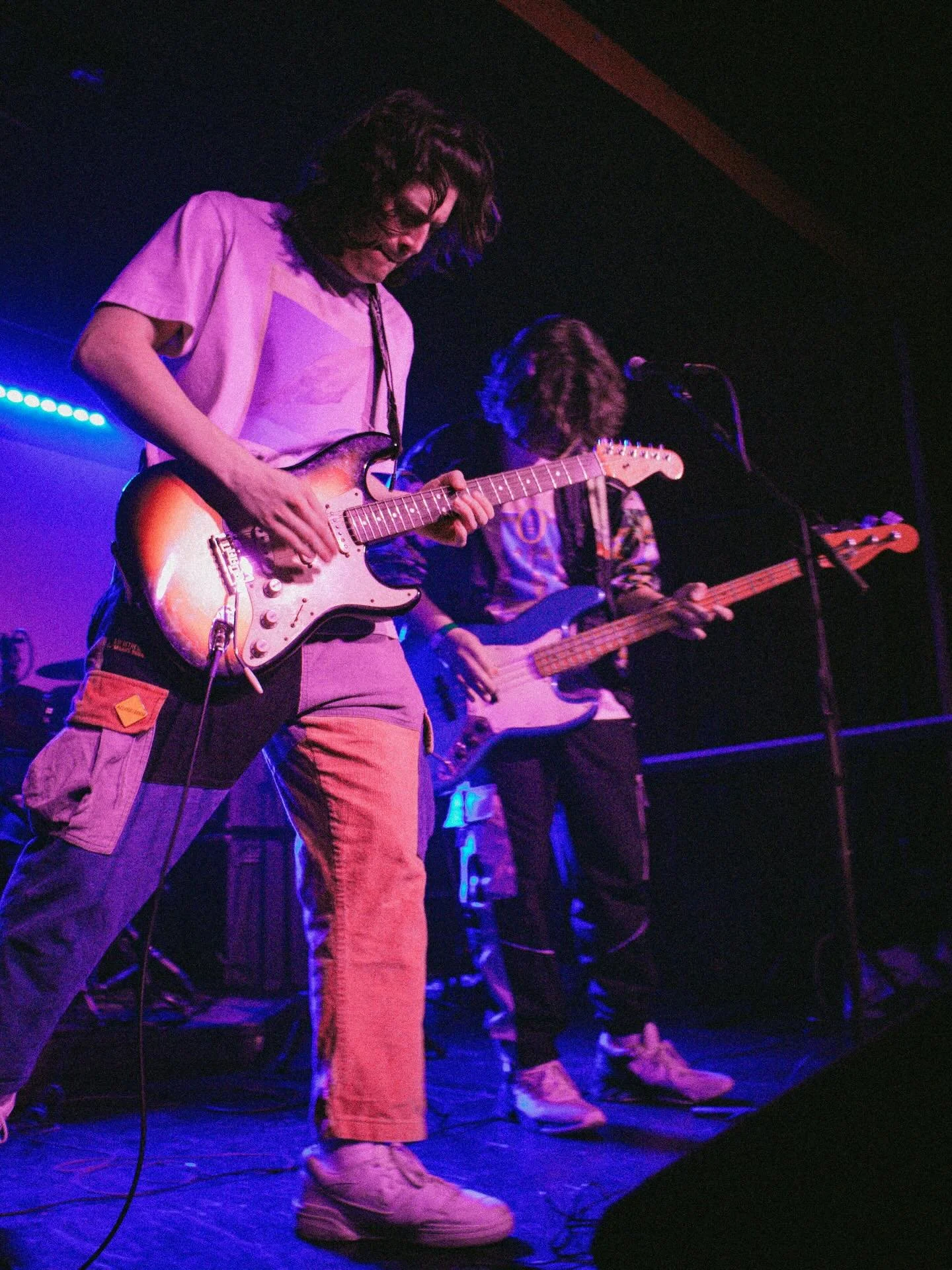
Recent Blevins performance in Manhattan, New York
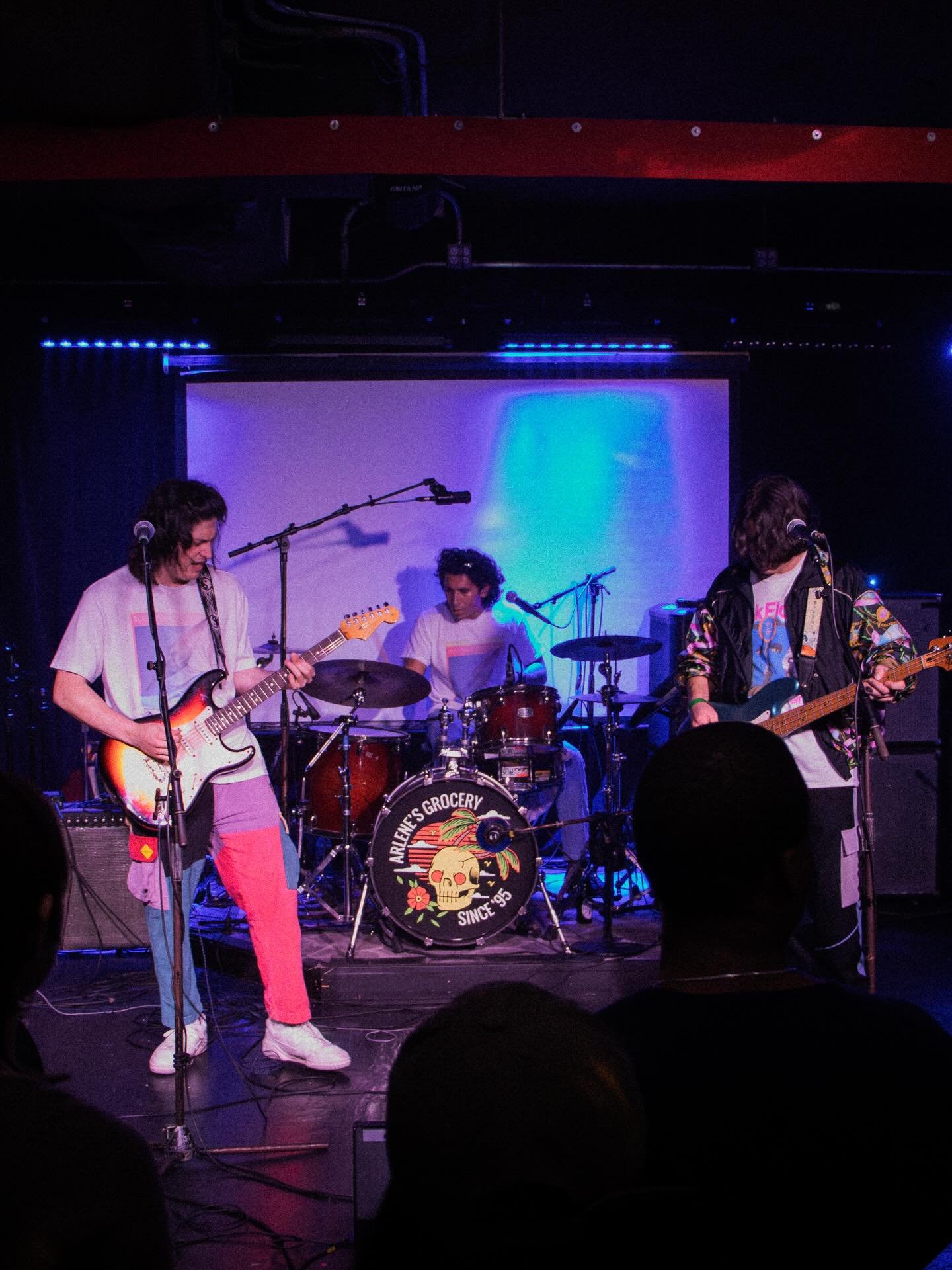
Recent Blevins performance in Manhattan, New York
Brandon: We've definitely improved over the years just from doing gigs as our main source of income, just because when push comes to shove, we have to be good. We have to jam. We push ourselves a lot of the gigs, maybe at times too much, but we always get it done. Like this lot, we just came off of the road like a week. It was pretty much a week and a half straight of gig after gig after gig. And we're, you know, independent. So it's not like people are setting our stuff up at the moment for us. So, yeah, it's a grind, but at the same time, we’re coming back into the studio and having to put all the pieces together for the album that we're making and mixing, mastering, production, producing all by ourselves, all that stuff.
So that's a big part of that. Our journey is literally that we go to gigs, we do shows, we come home and we make the album and we tell our significant others we love them very much and call mom, call dad and get it going and just keep one foot after the other.
Q: I think that's one of the things about being an artist too is like finding that balance of how much of each thing to do. But it sounds like you have a really good flow as far as where, where you kind of sense your priorities are at the time.
Brandon: Yeah. I laugh just cause it's, it's out of necessity. It's taken a long time to even just get where we are now. At times it feels so funny. Like, five years down the road we'll look back and be like, wow, we were really doing that. In real time with everything floating around, it's like, we’re just going to try our best. And being brothers has really helped with that. Having brothers that are close or family that's close is a big center of our operation.
Q: It's a good foundation to have. Cause I mean, to have people that you can count on, especially in this business, is really important.
Dillon: Yeah, for sure.
Q: Are there any main takeaways or anything that you would want to tell people who are just getting introduced to you guys or your music?
Brandon: Thank you for listening to us. This is what we're doing for the rest of our lives. That's our plan.
We're brothers. We're going to stick together. We're going to make it through no matter what.
We might as well try to become some rock stars who have good hearts at the end of the day in this life. Stream the new stuff when it comes out…we’re working on it! Thanks for having patience with us. And believe in the DIY brother band out of Brackettville, Texas, population 2,000!
Make sure to check out Blevins on any of the links listed below and stay tuned for the new music they’ve been working on!
Blevins Website: https://www.blevinsband.com/
Instagram: https://www.instagram.com/blevins_band/?hl=en
YouTube: https://www.youtube.com/@blevins3116